

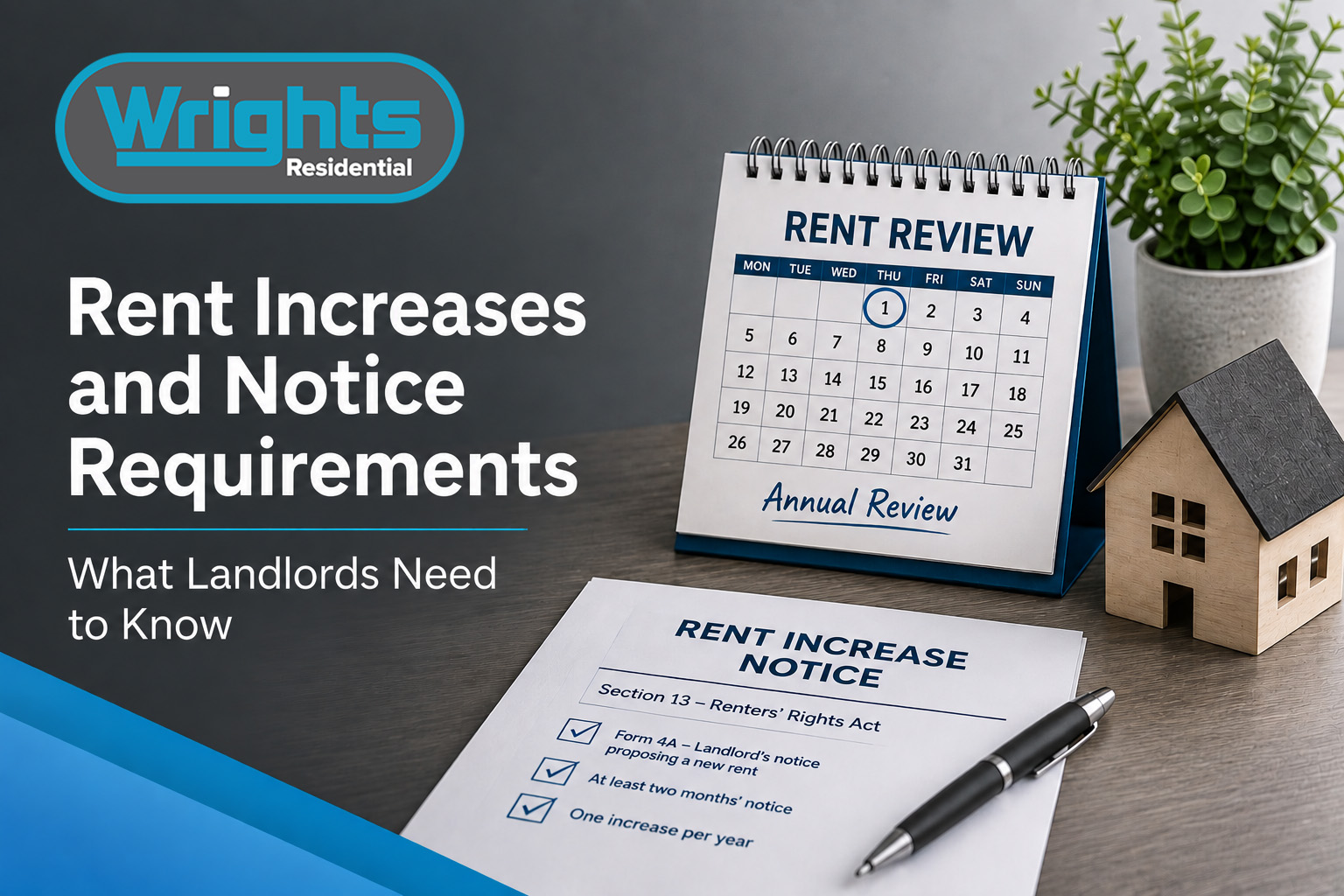
How and When You Can Increase the Rent
Last updated: August 2026
The Renters' Rights Act has changed the way landlords in England can increase the rent during a tenancy.
Since 1 May 2026, landlords of assured periodic tenancies must follow a prescribed process when increasing rent. Rent increases are limited to once a year, tenants must receive at least two months' notice, and landlords must use the correct statutory form.
For landlords who were previously accustomed to using rent review clauses or agreeing increases directly with their tenants, this is an important change.
At Wrights Residential, we want landlords to understand not only how often rent can be reviewed, but also the correct procedure to follow when an increase is appropriate.
How Often Can a Landlord Increase the Rent?
A landlord can increase the rent once a year.
For a new tenancy, the rent cannot be increased during the first year of the tenancy. Once the first year has passed, an increase can take effect, but a further increase cannot then take effect for at least another 12 months.
This means landlords should think carefully about the rent set at the beginning of a tenancy and plan future rent reviews accordingly.
How Does a Landlord Increase the Rent?
Since 1 May 2026, landlords must use the statutory Section 13 process to increase the rent of an assured periodic tenancy.
The landlord must complete Form 4A – Landlord's notice proposing a new rent and give it to the tenant at least two months before the proposed new rent is due to take effect.
The notice can be given:
- in person;
- by post; or
- by email, if the tenancy agreement allows notices to be served by email.
The new rent cannot take effect earlier than the date permitted under the annual rent increase rules.
What If the Landlord and Tenant Agree to the Increase?
This is an important change.
Even if the landlord discusses the proposed increase with the tenant and the tenant is perfectly happy to pay the new rent, the landlord must still follow the Section 13 process and serve Form 4A.
The Section 13 process must be followed every time the rent is increased, even where the increase has already been agreed with the tenant.
This means an informal agreement by telephone, email or text message should not be treated as a substitute for the statutory notice.
There is nothing wrong with discussing a proposed increase with a tenant beforehand, but the formal process must still follow.
Can a Tenancy Agreement Include a Rent Review Clause?
This is another area where landlords need to be careful.
Under the new system, a landlord cannot rely upon a contractual rent review clause as an alternative way of increasing the rent.
The Section 13 process must be followed for rent increases.
This is particularly relevant to landlords with tenancy agreements written before the Renters' Rights Act changes, as those agreements may contain rent review provisions which were previously used to increase the rent.
The fact that such wording remains in an older tenancy agreement does not mean that it can continue to be used instead of the new statutory process.
Where an increase under a rent review clause was agreed before 1 May 2026 but was due to take effect after that date, the increase does not apply.
How Much Can the Rent Be Increased By?
The legislation does not set a fixed percentage by which rent can be increased.
However, the proposed rent should reflect the open market rent – broadly, the rent the landlord could reasonably expect to receive if the property were being let on the open market.
This makes obtaining an accurate assessment of the property's current rental value particularly important before proposing an increase.
A rent increase should therefore not simply be based upon a percentage or the landlord's increased costs. Consideration should be given to the rental value of comparable properties in the local market.
What If the Tenant Thinks the Increase Is Too High?
A tenant who believes that the proposed rent is higher than the property's open market rent can apply to the First-tier Tribunal to determine the appropriate rent.
The tribunal will consider the property's open market rental value rather than simply deciding whether the landlord's proposed increase feels reasonable.
This is another reason why landlords should have a realistic understanding of the property's rental value before serving notice.
Keeping evidence of comparable properties and the basis on which the proposed rent was assessed can also be useful.
What About Rent Increases Started Before 1 May 2026?
There are transitional arrangements for increases that were already underway when the new legislation came into force.
If a landlord used the previous Form 4 to give valid notice of a rent increase before 1 May 2026, the notice and the proposed increase can still take effect even where the new rent starts after 1 May 2026.
The date of that increase is then important when considering the next rent review.
For example, if an increase took effect on 1 February 2026, another increase cannot take effect until at least 1 February 2027. This remains the case even though the previous increase happened before the new rules came into force.
As mentioned above, the position is different where an increase was based solely on a contractual rent review clause. If that increase was agreed before 1 May 2026 but was due to take effect afterwards, it does not apply.
What Should Landlords Do Before Increasing the Rent?
Before proposing an increase, landlords should consider four key points:
When did the tenancy begin?
If the tenancy is still within its first year, the rent cannot yet be increased.
When did the last increase take effect?
At least 12 months must pass before another increase can take effect.
What is the current market rental value?
Consider comparable properties and current local market conditions rather than choosing an arbitrary percentage increase.
Has the correct notice been prepared?
Form 4A must be used and the tenant must receive at least two months' notice.
Checking these points before serving notice can help avoid an invalid or incorrectly timed rent increase.
Why Regular Rent Reviews Can Be Important
There is no requirement for a landlord to increase the rent simply because they are entitled to do so.
Some landlords may choose to leave the rent unchanged, while others may prefer to review it periodically against the local market.
However, because increases can now take effect only once a year, it can be sensible to review the rent annually, even if the eventual decision is not to increase it.
Regular reviews can help landlords understand how the rent compares with similar properties and avoid reaching a position where the rent has been left unchanged for several years and has fallen significantly behind the local market.
A review does not have to result in an increase – it simply gives the landlord an opportunity to make an informed decision.
How Wrights Residential Can Help
Knowing when to review the rent is one thing; understanding the appropriate market rent and ensuring that an increase is implemented correctly is another.
For landlords using our Fully Managed service, Wrights Residential can keep the rent under review as part of the ongoing management of the tenancy. Where an increase is appropriate, we can consider current local market conditions and manage the relevant notice process on the landlord's behalf.
For landlords who manage their own properties, we can also help with understanding the current rental value of a property.
With the rules surrounding rent increases now more prescriptive, keeping accurate records of tenancy start dates, previous rent increases and notices served has become increasingly important.
If you are unsure whether the rent on your property reflects the current market, or would like to discuss how our Fully Managed service can help with the ongoing management of your tenancy, please contact our friendly team at Wrights Residential.
Please note: This article is intended as general guidance for landlords in England and is correct to the best of our knowledge at the time of publication. Individual circumstances may vary and legislation and regulatory requirements can change. It should not be relied upon as legal advice. If you are unsure how the rent increase requirements apply to your tenancy, please seek appropriate professional advice.


